 Official government website of the Government of the Kingdom of Saudi Arabia




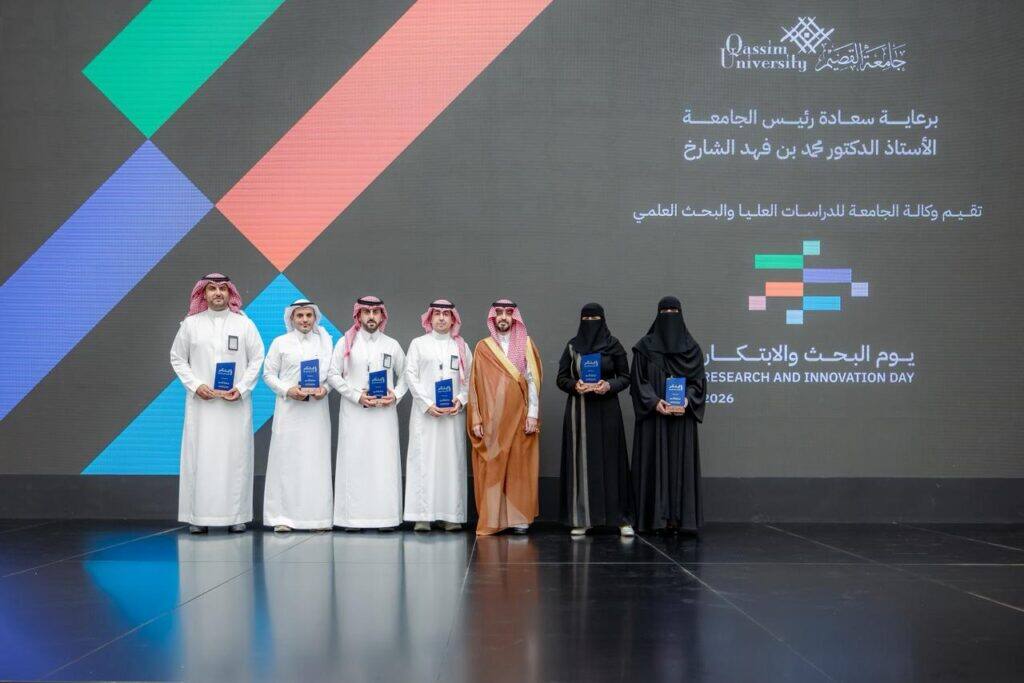
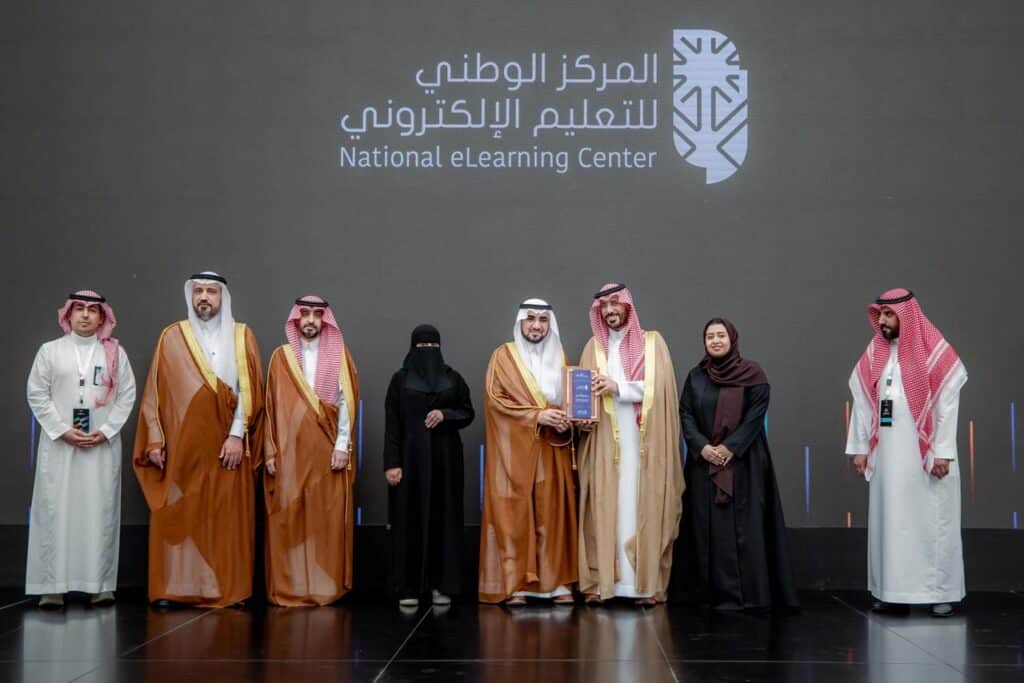
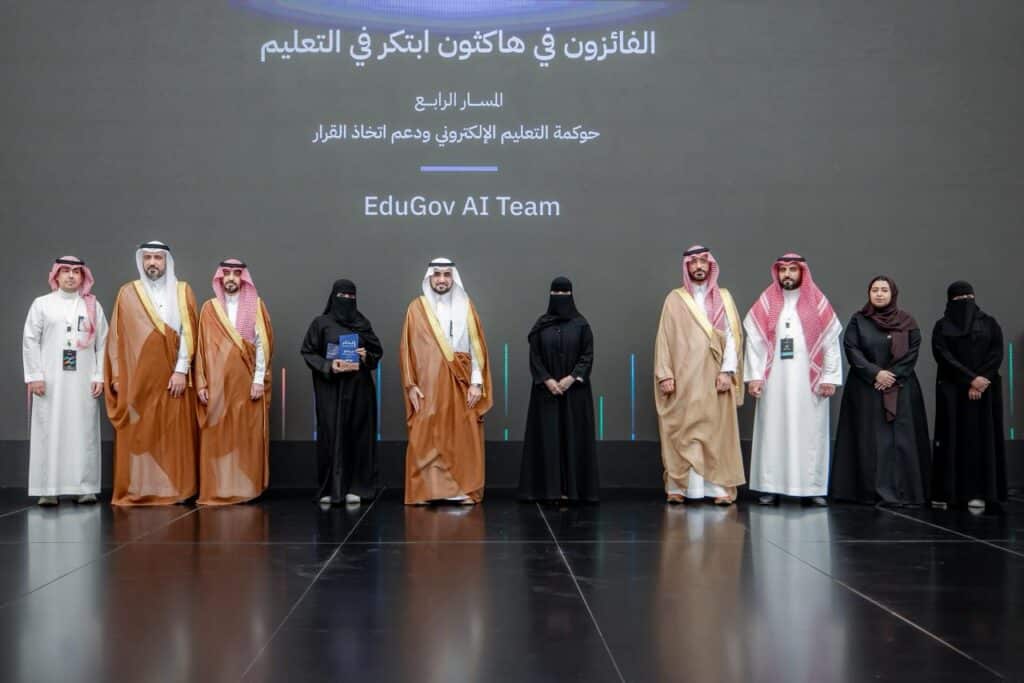
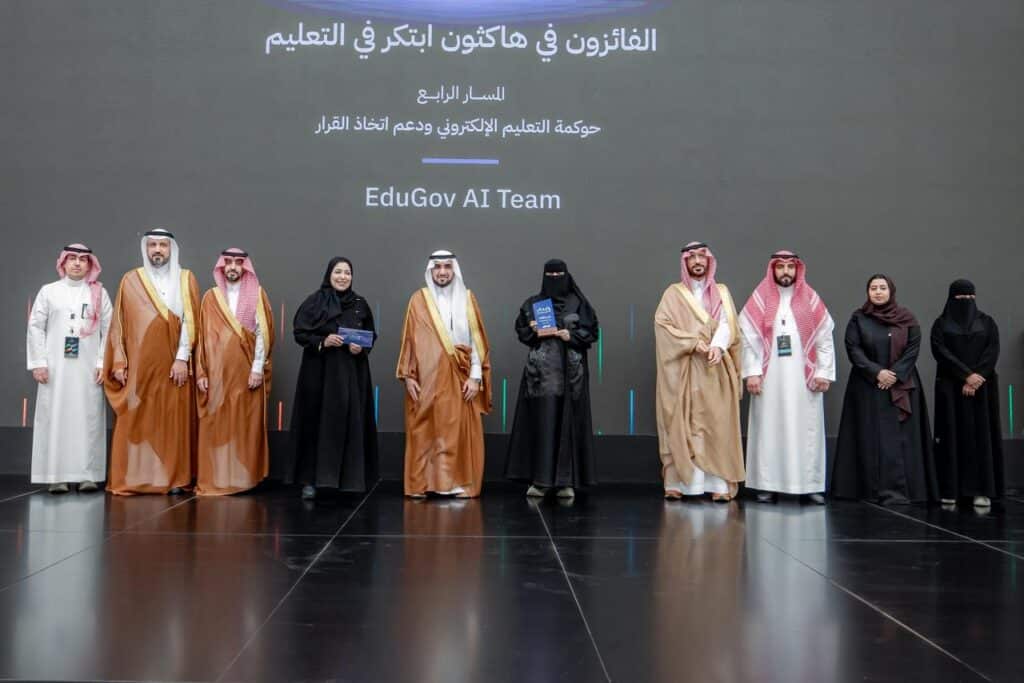
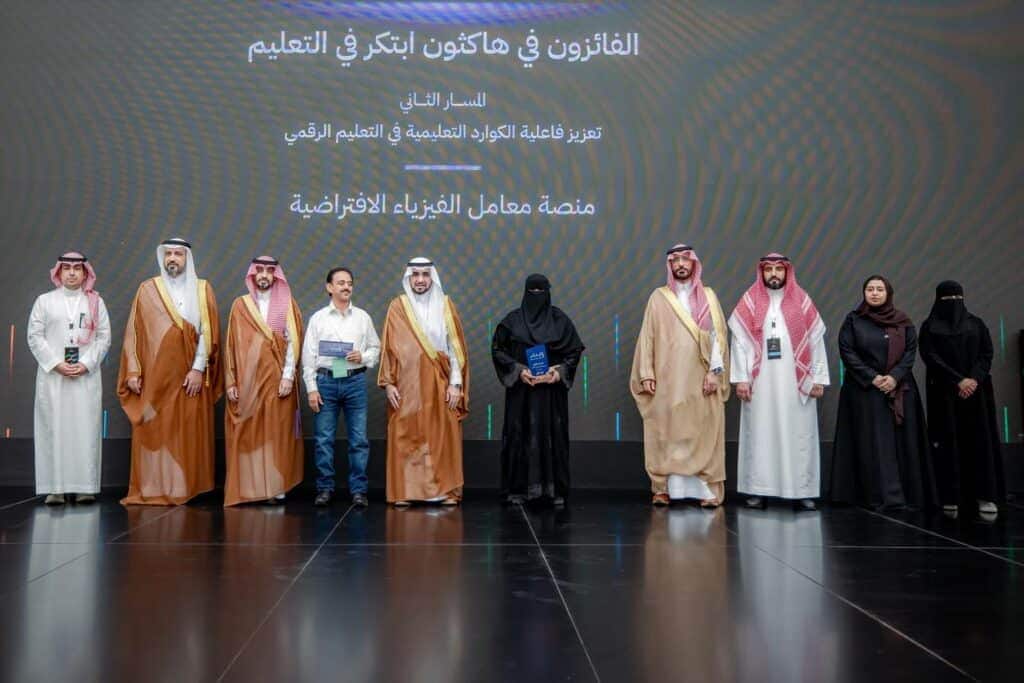
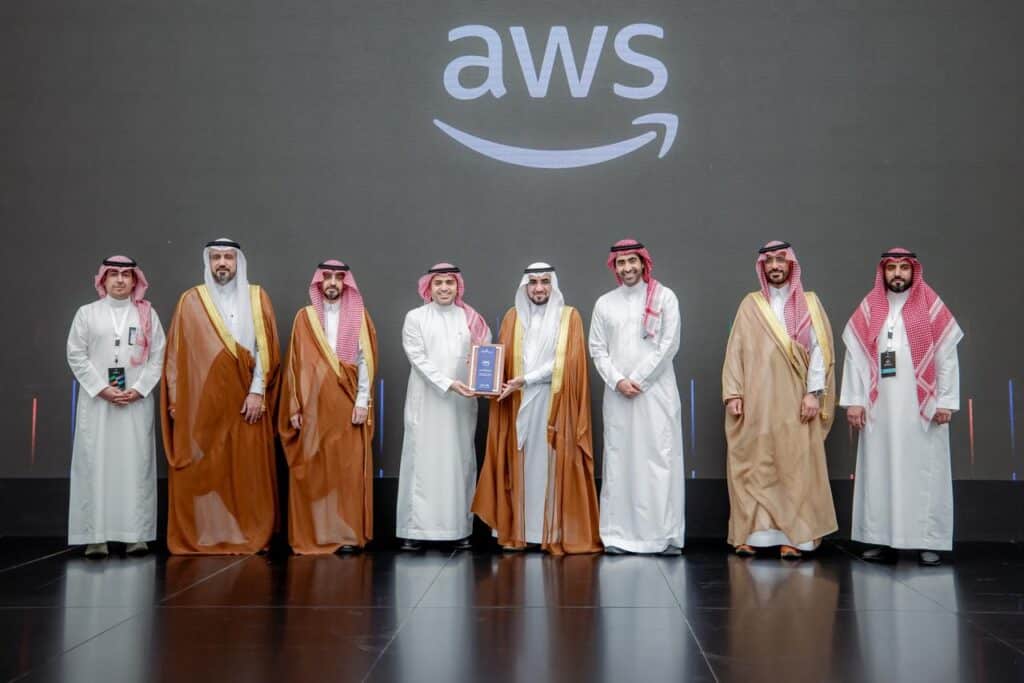
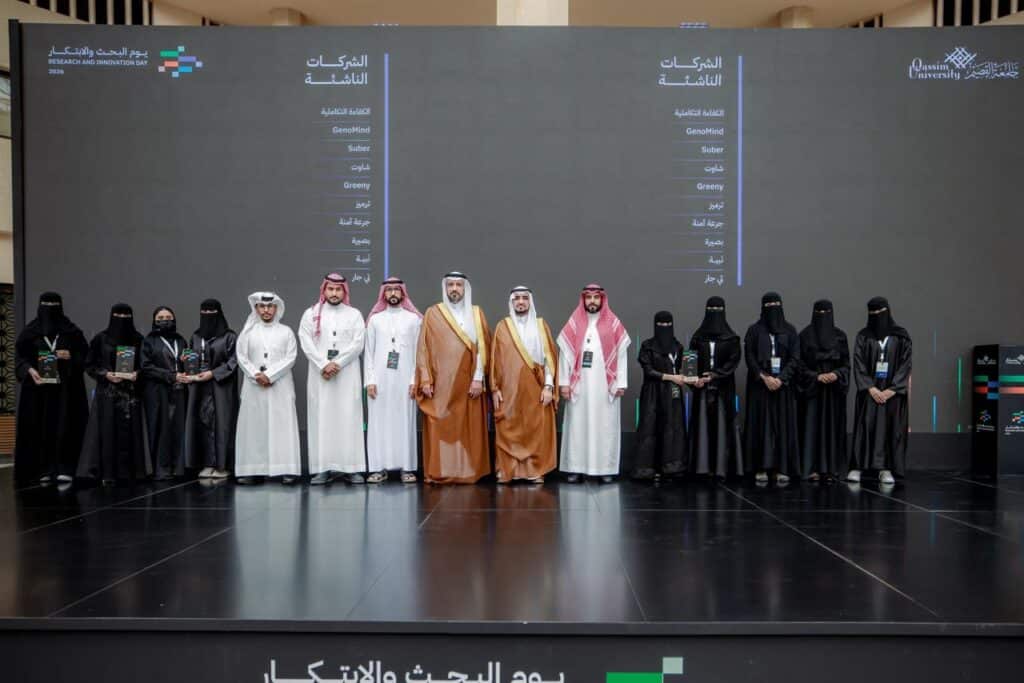
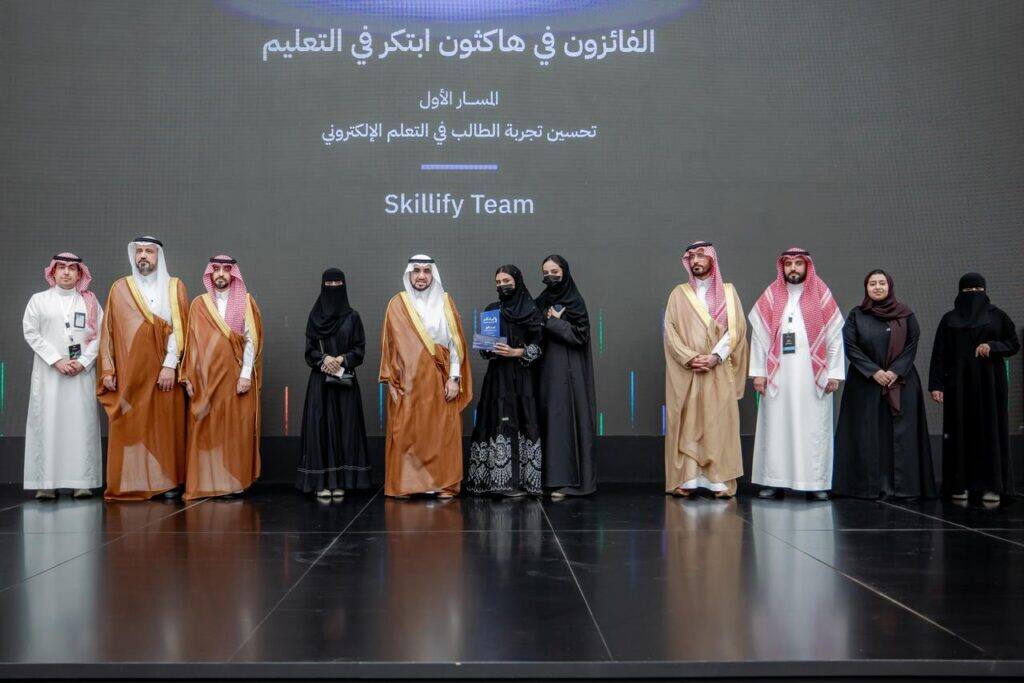
His Excellency the President of the University, Professor Dr. Mohammed bin Fahad Al-Sharikh, honored the winners of the «Innovate for Education» Hackathon, which was organized by the university in cooperation with the National Center for E-Learning, yesterday, Wednesday, May 13, 2026. The ceremony was attended by Mr. Mohammed bin Abdulaziz Al-Shuwai'er, Vice Governor for Governance and Excellence Sector at the Center, university vice presidents, and staff at the main foyer of the university city.
His Excellency the President of Qassim University confirmed that the university's hosting of this event embodies its commitment to supporting innovation and promoting digital transformation in education, in line with the objectives of the Kingdom's Vision 2030. He pointed out that developing the educational process represents a fundamental pillar for building a more efficient, flexible, and sustainable educational future.
The hackathon aims to employ emerging technologies and artificial intelligence in developing the educational process, enabling innovators to present qualitative solutions that contribute to building the future of digital education in the Kingdom.
The hackathon focused on attracting competencies and talents from various disciplines, fostering an environment of innovation, and supporting applicable technical solutions in the educational sector. This included developing innovative solutions that enter the pilot phase, completing experimentation, and measuring impact, in addition to developing capacities for employing artificial intelligence in education, expanding the initiative's reach across the Kingdom's regions, attracting innovators, and growing the initiative's community.
The hackathon tracks included improving the student experience in e-learning, enhancing the effectiveness of educational staff in the digital environment, developing the quality of courses and educational programs, in addition to e-learning governance and decision-making support.
The total number of advanced teams participating in the hackathon was 178, of which 36 teams were accepted. The total number of participants was 97 from various regions of the Kingdom. A remote training program, both synchronous and asynchronous, was also implemented to qualify participants and raise their readiness for competition through a set of specialized courses.
