 Official government website of the Government of the Kingdom of Saudi Arabia




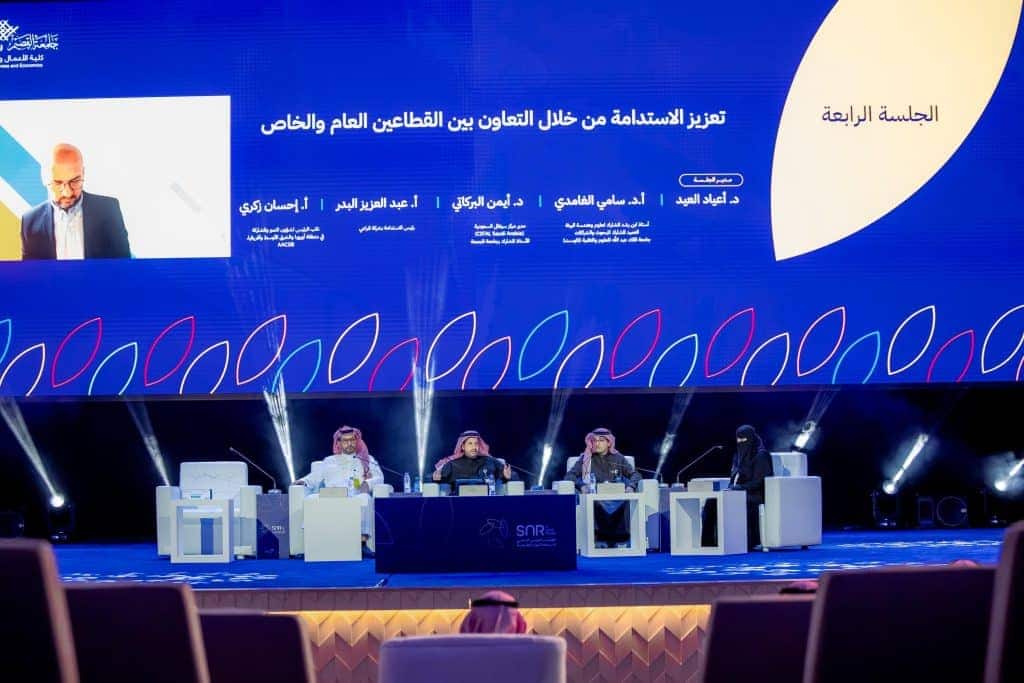
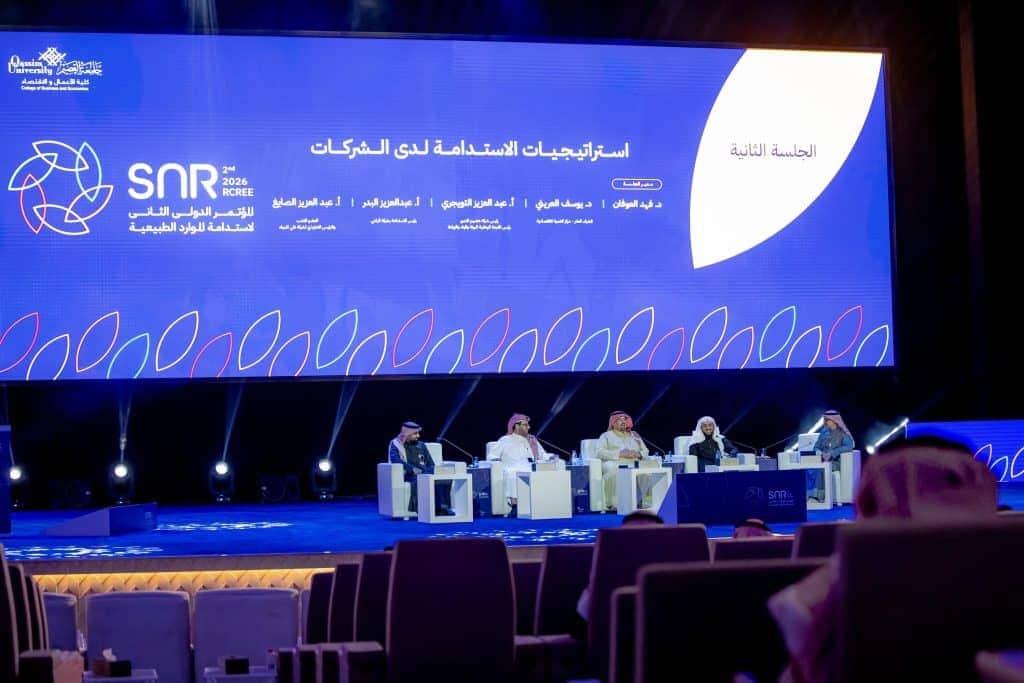

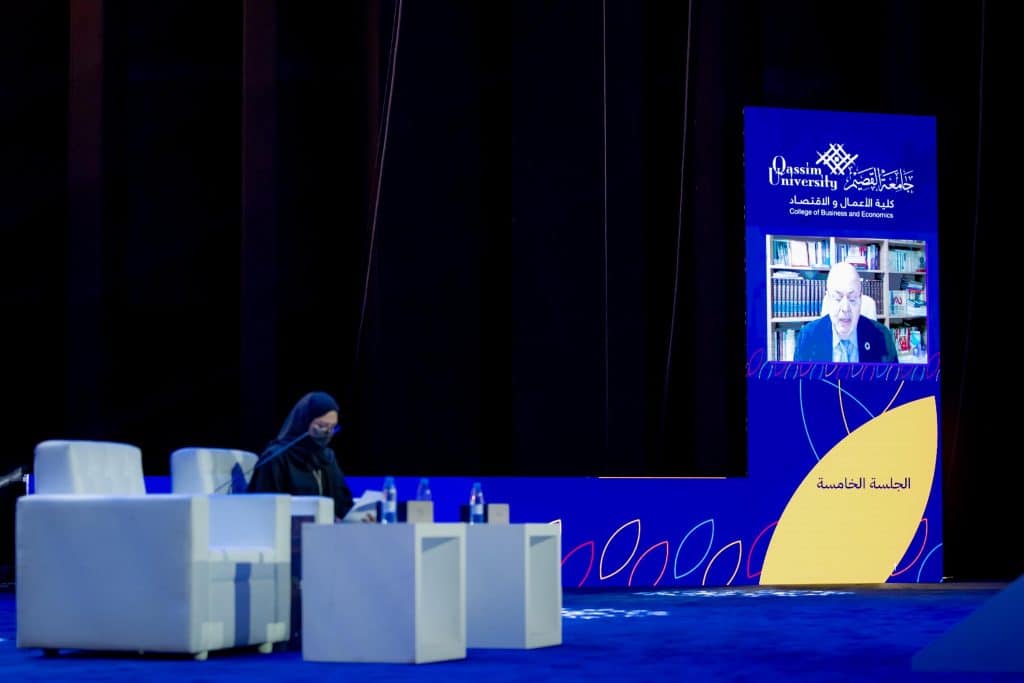
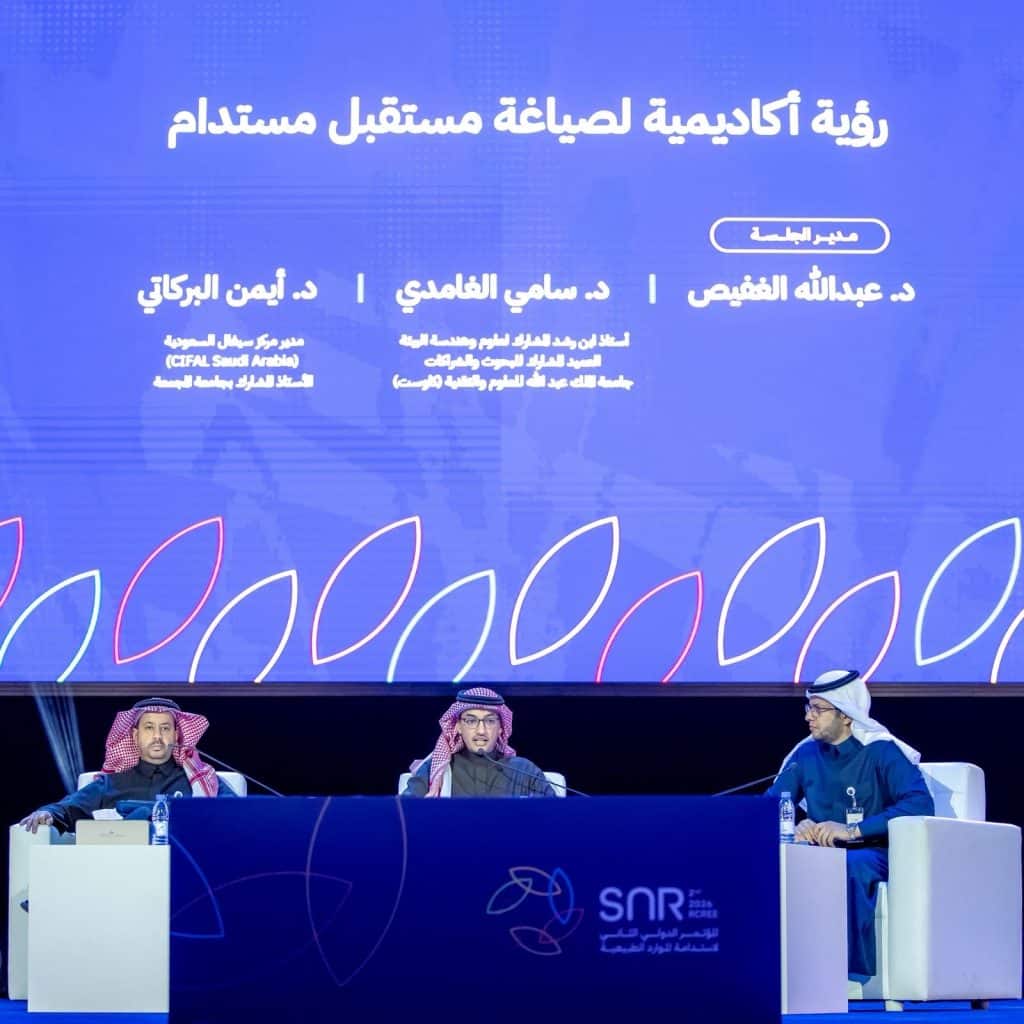
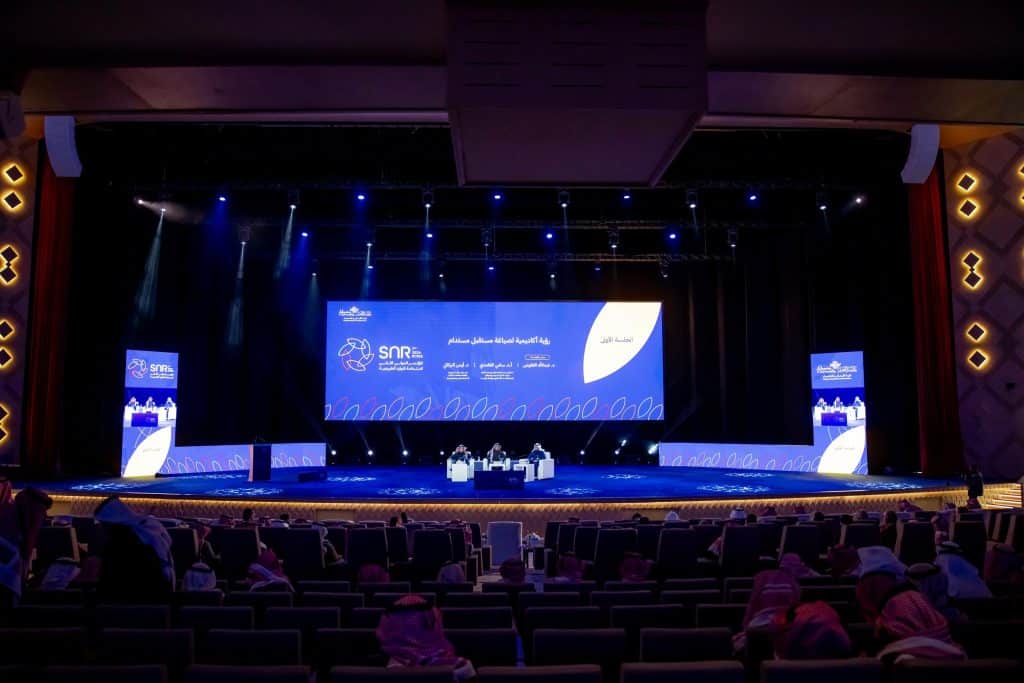
The second international conference on the sustainability of natural resources, organized by Qassim University represented by the College of Business and Economics, featured five dialogue sessions to discuss the most prominent sustainability-related themes. Researchers, local and international specialists, and representatives from the public and private sectors participated in the conference, which was held at the King Abdulaziz Conference Center in the university city.
The first session, titled “An Academic Vision for Shaping a Sustainable Future,” addressed several key areas. Speakers discussed the importance of redefining sustainability in an academic context, sustainability as a comprehensive development framework, and interdisciplinary academic approaches to holistically tackle complex challenges. They also highlighted genuine interdisciplinary research as a fundamental gateway to producing applicable knowledge that bridges theory with development reality. The session further explored the shift in universities“ roles towards impact creation and the necessity of accelerating their transition from traditional educational and research institutions to development actors integrating sustainability into education, research, and community service. The second session, titled ”Sustainability Creates Value: Corporate Sustainability Strategies," reviewed the experiences of several national companies in leveraging sustainability as a strategic driver for economic value creation and enhancing competitiveness. It was emphasized that sustainability is no longer merely an ethical commitment or social responsibility but an intrinsic part of business models and investment decisions. This is due to its direct role in rationalizing resource utilization, improving spending efficiency, and reducing operational and financial risks. The session also discussed the importance of integrating sustainability into operational processes and supply chains, leading to tangible financial savings and improved production efficiency. Furthermore, it highlighted the significance of aligning corporate strategies with the region's development priorities, the role of sustainability in directing investments towards value-added sectors, and fostering public-private sector integration to achieve sustainable economic development.
The third session discussed “Entrepreneurship and Sustainability: From Impact Measurement to Resource Efficiency,” where speakers addressed the concept of sustainability in entrepreneurship as a fundamental element in designing entrepreneurial projects and linking it to environmental, economic, and social impact. They also covered the core differences between entrepreneurship and traditional business in dealing with sustainability, and reviewed real-world experiences in applying circular economy concepts such as waste reduction, reuse, and transforming waste into economic value. The fourth session, titled “Enhancing Sustainability Through Public-Private-Academic Cooperation,” was held, emphasizing cooperation between the public, private, and academic sectors as an imperative for achieving sustainability, given the complexity of environmental, economic, and social challenges and the inability of any sector to operate in isolation to achieve a sustainable impact. The fifth session, titled "The United Nations and Sustainability Initiatives – International Cooperation," was held. The session addressed the shift in the United Nations' approach from previous development agendas to Agenda 2030 and the Sustainable Development Goals (SDGs). It emphasized the inclusivity of this framework and its integration of economic, social, and environmental dimensions globally, as well as the importance of international cooperation and multi-stakeholder partnerships as a cornerstone for achieving the SDGs. It also highlighted the role of governments, international organizations, academic institutions, and the private sector working together to address global challenges.
