Official government website of the Government of the Kingdom of Saudi Arabia




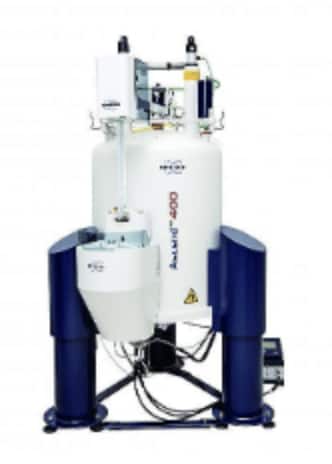
The 400MHz NMR is an indispensable tool in chemistry. From structure elucidation and verification to reaction monitoring, organic chemistry cannot be imagined without this powerful analytical method. In other areas of chemistry, NMR provides rare insight into aspects such as catalyst structure, material state, and reactions.
- H1 & C13 and other different nuclei such as 31P, 29Si, 27Al, 15N in 1D experiment
- Analyzing DEPT C13 experiment
- Studying the molecule structure by 2D NMR experiments using COSY, HSQC, and NOESY.
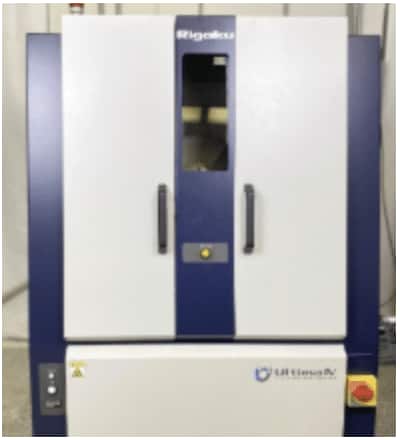
X-ray Diffraction (XRD) is the fundamental technique for obtaining information on the atomic structure of crystalline solids and is one of the key standard laboratory techniques. XRD is based on the interference of X-ray waves elastically scattered by a series of atoms oriented along a particular direction in a crystal characterized by a vector Oh
The waves scattered by two atoms a And b interfere constructively when the path difference (PQR) is equal to an integer number of wavelengths: PQR = hλ
This condition is valid for orientations K of the scattered waves which satisfy the Laue condition: Ah = h(K1 - K0)
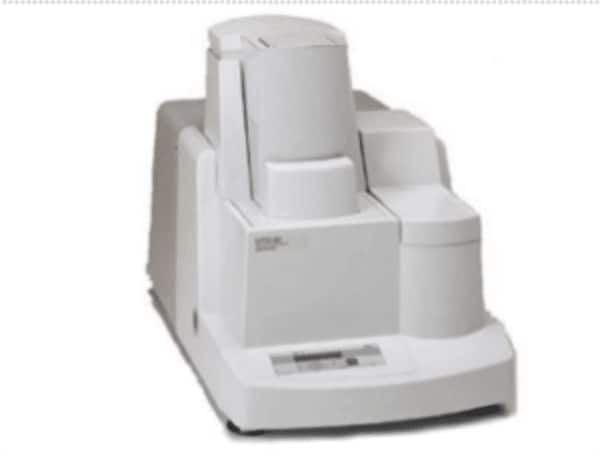
Thermal analysis is the study of changes in a property of a sample that are related to an imposed change in temperature. The sample is usually in the solid state, and the changes that occur upon heating include melting, phase transition, sublimation, and decomposition.
Thermogravimetric Analysis (TG) is the name given to the analysis of how a sample's mass changes during heating. TG measures mass changes in a material as a function of temperature (or time) within a controlled atmosphere. Its main uses include determining thermal stability and material composition. TG is especially helpful for studying dehydration, decomposition, desorption, and oxidation processes.
The most widely used thermal analysis method is Differential Thermal Analysis (DTA). In DTA, the temperature of a sample is compared with that of an inert reference material during a programmed temperature change; the temperatures remain equal until a thermal event occurs, such as melting, decomposition, or a change in crystal structure.
If an endothermic event occurs within the sample, the temperature of the sample will lag behind that of the reference, resulting in a minimum on the curve. Conversely, if an exothermic event occurs, the temperature of the sample will exceed that of the reference, producing a maximum on the curve.
The area under the endothermic or exothermic peak is related to the enthalpy of the thermal event. Enthalpy Change. For many applications, it is advantageous to use both DTA and TG, since DTA events can then be classified into those that involve mass change and those that do not.